Sustainability and how we care for our environment
2. Buildings and Estates Planning
Using less energy and decarbonising residual energy use is fundamental to supporting the transition to net zero carbon. To ensure operational resilience and mitigate the impacts of climate change by reducing emissions from our activities we must use energy as efficiently as possible.
To do this, we need to facilitate a shift in the quality of our existing and planned building stock, reducing the heat and electricity energy demand of buildings by up to 60%; insulating, controlling and managing energy consumption will significantly reduce energy demand whilst also improving the quality of our internal environments and enhancing our organisational resilience.
Making a start
Since the April 2018-March 2019 year, we’ve reduced Scope 1 and 2 emissions by 11% across our operations.
We have a comprehensive Estates Strategy that details estate optimisation and rationalisation between 2018 and 2028.
We’ve prepared a comprehensive Buildings Decarbonisation Strategy that sets out a programme to work towards Net Zero Carbon buildings by 2030, overseen by a decarbonisation programme delivery board with a focus on decarbonising Scope 1 and 2 emissions.
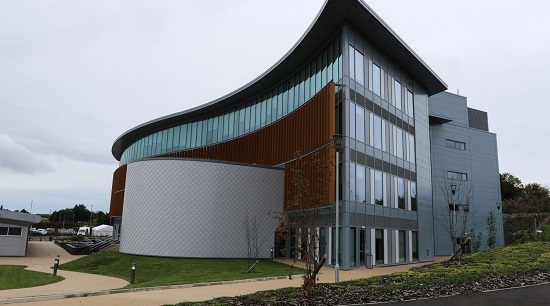
To decarbonise heat, 12 of the most impactful South Wales Police buildings have had full heat decarbonisation plans prepared, with a focus on measures for improving energy efficiency for heat and electricity use, transitioning from a reliance on gas to air-source heat pumps, and installing renewable energy.
In 2023, South Wales Police successfully applied for and received £250,000 in grant funding from the Welsh Government as part of collaboration with Bridgend County Borough Council to install solar car park canopies at our fleet garage workshops. The solar systems now generate and provide the site around £25,000 of solar energy per annum.
To support delivery of our Net Zero ambition, we've recruited an Environmental team led by a tri-force environmental manager.
Understanding our estateWe’ve started mapping out the opportunity across our estate to utilise assets to enhance biodiversity and sequester carbon as well as generate renewable energy to power our residual energy demand. We’ve also started flood risk assessments to consider projected climate change impact on our existing and planned estate, to be built into our estates strategy. Adapting our estate to the impacts of climate change will be fundamental to ensuring our operational resilience over the coming years. |
Ambition: The Scale and Pace of the Challenge
Within our building transition strategy and our overall commitment to Net Zero 2030, we've identified a suite of ambitious targets and actions. The following are our key areas.
| Area of focus | Key actions |
|---|---|
| 1. Deliver buildings decarbonisation strategy |
Monitoring and measuring: utility software improvements - gap analysis on utility management systems and how they're used actively for management across the estate and roll out of gas and electricity metering across the estate. Prepare and deliver a Heat and Electricity Decarbonisation Strategy to deliver a transition to zero carbon across all operations including buildings, fleet, and energy generation and use. Control the energy we’re using: building management - carry out building management systems optimisation at Bridewell sites. |
| 2. Funding and governance |
Review electrical capacity at all sites to support roll out of charging infrastructure. Apply for Salix low-carbon skills fund and heat decarbonisation fund; undertake regular grant reviews to seize all funding opportunities individually and with partners. Continue robust governance and collaboration through the decarbonisation programme board as well as establishment of an overall senior climate change response board. |
| 3. Estate policy and management |
Strategic estates planning and land use: strategic estates planning will have carbon efficiency as a core principle. Quantified carbon will be a key decision metric for planning new developments, rationalisation of the estate and championing smarter ways of working. Undertake a climate change risk assessment on the existing estate to assess the impacts of climate change such as high temperatures and flood risk. Map out the whole South Wales Police estate including buildings, open and green spaces to determine the opportunity for sequestration, enhancement of biodiversity and installation of renewable energy. |
| 4. Staff Active Travel Survey |
Deeper engagement with colleagues from all departments to support Net Zero goals. Roll out carbon literacy training for all colleagues. |
| 5. Collaboration |
Participate in stakeholder forums and work with external partners to deliver a low-carbon transition - collaborations with Welsh Public Service Boards, Joint Emergency Services Group, All Wales group, Climate Emergency Board. |